


【Client Alert】 Key Points under Japanese Law Regarding M&A of Medical Corporations
Key Points under Japanese Law Regarding M&A of Medical Corporations
Key Questions (FAQ)
-
Q1. What is the fundamental principle regarding the M&A of medical corporations in Japan?
- A: The "not-for-profit nature" is paramount; medical corporations are strictly prohibited from distributing surplus, and governance is strictly based on "one vote per member" regardless of the contribution amount, effectively separating equity interests from management rights. -
Q2. Can a for-profit entity (such as a stock company) directly acquire or manage a Japanese medical corporation?
- A: No, from the perspective of their not-for-profit nature. For-profit corporations (such as stock companies) cannot become members of a medical corporation, and concurrent officer positions are also restricted in principle. Acquirers make structuring arrangements, such as strategically restructuring the composition of the members. -
Q3. What are the primary M&A schemes available for Japanese medical corporations?
- A: There are four main schemes: (i) replacement of members (with equity transfer if applicable), (ii) business transfer, (iii) merger between medical corporations, and (iv) company split. Unlike typical corporate M&A, all schemes require authorization from prefectural governors and strict statutory procedures. -
Q4. What is the difference between medical corporations “with” and “without” equity interests in an M&A context?
- A: The fundamental difference lies in whether equity interests can be transferred. For corporations with equity interests (established prior to 2007, accounting for approx. 62% of the total according to statistical data as of the end of FY2023), financial value can be transferred via equity interest in addition to replacing members. Conversely, for corporations without equity interests, the concept of equity transfer does not exist, so M&A schemes are primarily structured around the replacement of members. -
Q5. What specific areas must be scrutinized during legal due diligence (DD) for a medical corporation?
- A: Key areas include compliance with the not-for-profit rule, medical dispute risks (such as informed consent processes), operational importance and concurrent position restrictions with affiliated MS (Medical Service) corporations, labor management of medical staff, and potential subsidy repayment risks.
As the life science and healthcare industry continues to grow in importance, private companies—both within and outside Japan—are showing increasing interest in the M&A of medical corporations, such as hospitals and clinics. However, under Japanese law, any M&A involving a medical corporation requires careful consideration of its strict regulations and unique governance structure, which differ from those of general for-profit corporations like stock companies (Kabushiki Kaisha).
This column aims to provide a brief overview of the regulations under the Japanese Medical Care Act, the unique governance structures, and the potential M&A schemes to consider when targeting a medical corporation for acquisition. We will focus particularly on association-type medical corporation (shadan iryo hojin), which accounts for the majority of such entities. In the following, any reference to a “medical corporation” assumes an association-type medical corporation.
1.“Not-for-profit nature" of Medical Corporations
The most important concept in understanding the legal regulations and governance of medical corporations is their "not-for-profit nature". The Japanese Medical Care Act stipulates that the necessary permission for establishment may be withheld from anyone intending to establish a hospital, clinic, or midwifery home for profit(Article 7, Paragraphs 1 and 7 of the Act).
Based on the concept of not-for-profit nature, medical corporations have the following characteristics.
・Prohibition of Surplus Distribution (Article 54 of the Japanese Medical Care Act):
Medical corporations are strictly prohibited from distributing surplus. Consequently, contributors (investors) cannot receive profits as direct dividends from a medical corporation. For contributors to obtain substantial economic benefits, structural ingenuity is required, such as concluding a management agreement with the medical corporation and receiving appropriate management fees.
・Separation of Equity Interests and Voting Rights (One Vote per Member) :
At the member’s meeting (Shain Sokai), which serves as the highest decision-making body, it is stipulated that each member has one vote, regardless of the presence or amount of their equity interests (Article 46-3-3 of the Japanese Medical Care Act). Consequently, merely making a substantial financial contribution to acquire a large equity interest does not result in acquiring management right over the medical corporation
・Restriction on Concurrent Holding of Positions as an Officer of a Medical Corporation and an Officer/Employee of a For-profit Corporation:
For-profit corporations, such as stock companies, cannot themselves become members of the medical corporation’s meeting of members (Shain Sokai). In principle, the manager and establisher of a medical institution, as well as the officers of the medical corporation, cannot concurrently serve as officers or employees of a for-profit corporation that has an interest in the establishment and management of the said medical institution.
An exception to this rule may be granted in cases involving commercial transactions, such as the provision of services by the for-profit corporation, provided all of the following conditions are satisfied: (1) the person does not become the representative of the medical corporation; (2) it is immediately difficult to change the officer to a third party due to the small scale of the for-profit corporation; and (3) the terms of the contract are deemed appropriate. Even when these conditions are met, such concurrently serving officers must not constitute a majority of the medical corporation's officers, and their dual roles must in no way compromise the not-for-profit nature of the medical corporation.
・Requirements for the Chief Director as a Representative Body:
In principle, a medical corporation must have three or more directors (Riji) and one or more auditors (Kanji) as its officers (Article 46-5 of the Japanese Medical Care Act), and such directors and auditors should be natural persons. In addition, the Chief Director (Rijicho), who serves as the representative body of the corporation, must generally be a medical doctor or a dentist (Article 46-6 of the Act).
It should be carefully noted that if the Japanese authority determines that the medical corporation is being operated substantially for profit in violation of the aforementioned not-for-profit nature rules, there is a risk that the permission to establish a medical institution may be revoked. When considering the M&A of a medical corporation, it is essential to fully understand these not-for-profit nature rules and carefully structure the scheme in compliance with them.
2. M&A Schemes for Medical Corporations
In light of these unique regulatory constraints, four primary M&A schemes are typically contemplated in practice:
・Replacement of Members (and Transfer of Equity Interests for Medical Corporations with Equity Interests in the Case of a Medical Corporation with Equity Interests):
As a scheme for the M&A of a medical corporation, one conceivable method is to acquire the decision-making authority of the medical corporation by replacing its members. In the case of a medical corporation with equity interests, in addition to this, the property value pertaining to the relevant equity interests is acquired by receiving a transfer of those equity interests.
However, as mentioned above, since a for-profit corporation itself cannot become a member, a scheme can be considered whereby the acquiring for-profit corporation has trusted natural persons appointed as members to replace a majority of the existing members, thereby increasing its influence over the management of the medical corporation. (In addition to this, involvement in management—such as veto rights—through contractual relationships, including monetary loan agreements and lease agreements, may also be stipulated.)
It should be noted that, due to the 2007 amendment to the Japanese Medical Care Act, the new establishment of medical corporations with equity interests is no longer possible from the perspective of thoroughly enforcing the not-for-profit nature of medical corporations. Therefore, existing medical corporations with equity interests were established prior to the amendment and continue to exist under transitional measures. According to public statistics at the end of fiscal year 2023, medical corporations with equity interests account for 62% of all medical corporations. On the other hand, in the case of a medical corporation without equity interests, an M&A scheme mainly focused on replacing members will be considered.
・Business Transfer:
This method involves acquiring the target medical business itself. However, a for-profit entity, such as a stock company, cannot directly acquire and operate a medical business (e.g., hospitals or clinics). Consequently, if the acquirer does not already possess a medical corporation, it must establish a new one to receive the transferred business. Obtaining the necessary authorization from the Japanese relevant authority under the Japanese Medical Care Act to establish a new medical corporation can be a highly protracted process. Additionally, a business transfer scheme necessitates the individual transfer of rights and obligations, meaning that explicit consent must be obtained from all relevant stakeholders, including creditors, employees, patients, and business partners.
・Merger:
This scheme utilizes a statutory merger procedure between medical corporations. Through a merger, the surviving corporation or the newly established corporation comprehensively succeeds to all rights and obligations of the absorbed corporation (Articles 58-5 and 59-3 of the Japanese Medical Care Act). When adopting a merger scheme, in addition to concluding a merger agreement (Article 57 of the Act), the consent of all members (Article 58-2, Paragraph 1 of the Act) is required. Additionally, the authorization from the Japanese authority (Article 58-2, Paragraph 4 of the Act), creditor protection procedures (Article 58-4, Paragraph 1, Article 58-3, Paragraph 1, and Article 59-2 of the Act), and registration of the merger (Articles 58-6 and 59-4 of the Act) are strictly required. Thus, compared to business transfer or equity interest transfer schemes, this method is characterized by the occurrence of multiple mandatory procedures. Furthermore, a merger is only possible between medical corporations; it is not envisaged that a stock company would merge with a medical corporation.
・Company Split (Corporate Split):
This method was not permitted until the 2015 amendment to the Japanese Medical Care Act. However, in response to the procedural complexities of a business transfer, which requires the individual consent of creditors for the transfer of debts and separate permission to establish a hospital, the method of a company split, recognized under the Japanese Companies Act, was introduced. As a result, a succeeding or a newly established corporation can succeed to all or part of the rights and obligations related to the business of the splitting corporation.
The procedures in a company split scheme are, in outline, similar to those of a merger. They require the conclusion of an absorption-type split agreement or the preparation and approval of an incorporation-type split plan (Articles 60 and 61 of the Medical Care Act), the unanimous consent of all members (Article 60-3, Paragraph 1 and Article 61-3 of the Act), authorization from the Japanese authority (Article 60-3, Paragraph 4 and Article 61-3 of the Act), creditor protection procedures (Article 60-5 and Article 61-3 of the Act), and registration of the split (Article 60-7 and Article 61-5 of the Act). Note that, unlike the merger scheme, labor protection procedures are mandatorily required (Article 62 of the Act), just as in a company split under the Japanese Companies Act.
3. Specific Points of Note in Legal Due Diligence for Medical Corporations
We have outlined the regulatory framework under the Japanese Medical Care Act driven by the not-for-profit nature of medical corporations, alongside their unique governance structures and typical M&A schemes. Finally, once the M&A policy for a medical corporation has been solidified and legal DD is to be implemented, it is important to confirm and closely examine the following matters during the DD process, in addition to the standard DD items in a typical corporate M&A.
- Compliance Status: It is necessary to verify compliance with relevant laws and regulations, including the Medical Care Act, and to strictly ensure that the corporation's not-for-profit nature is properly maintained.
- Medical Dispute Risks: It is critical to identify any existing claims or lawsuits regarding past and present medical accidents, as well as potential risks for future damages claims. Furthermore, it is essential to verify the proper implementation of informed consent procedures, along with the appropriate maintenance of consent forms, agreements, and other requisite documentation for treatments and surgeries conducted at the operated medical institutions.
- Transaction and Contractual Relationships: If the target medical corporation conducts transactions with an affiliated Medical Service (MS) corporation, these transactions may be vital to its operations. It is necessary to fully grasp the actual dynamics of this relationship and assess the operational importance of each transaction. Furthermore, a careful analysis must be conducted regarding the restrictions on concurrent positions held by officers and employees between the medical corporation and the affiliated MS (for-profit) corporation.
- Labor Issues: It is necessary to review labor management practices and identify any labor-related issues such as risks associated with unpaid overtime wages regarding affiliated doctors, nurses, and other medical staff.
- Subsidy-related Matters: It is necessary to confirm whether there are any restrictions on the use of subsidies received in the past, and whether the proposed M&A transaction could trigger repayment obligations or other related issues.
4. Conclusion
The M&A of a medical corporation demands a far more cautious and specialized approach than typical M&A transactions, owing to strict legal and regulatory frameworks, broad administrative discretion, and unique governance structures. Because the legality of any specific acquisition scheme must be carefully evaluated on a case-by-case basis, it is recommended to consult with legal experts to obtain a Japanese legal perspective from the earliest stages of considering the M&A of a medical corporation.
(Written by: Takuya Mima)
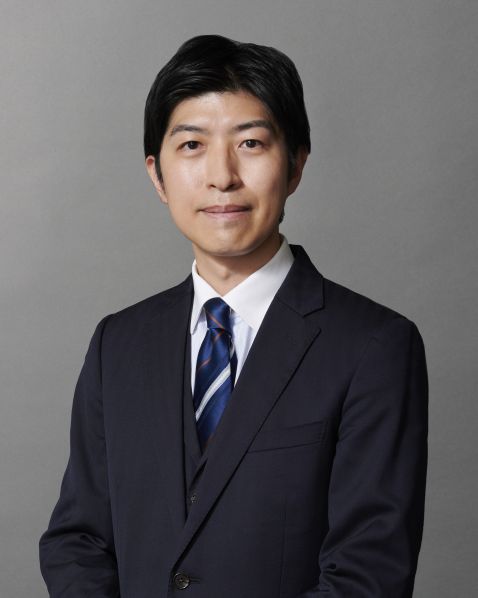
Counsel, Tokyo International Law Office
takuya.mima@tkilaw.com
Practice Areas: Life Sciences & Healthcare, Intellectual Property, M&A, Cross-border Transactions
Takuya Mima has over a decade of experience advising on corporate and transactional matters, with a particular focus on mergers and acquisitions, strategic alliances, business reorganizations, and cross-border transactions.
He is highly experienced in the life sciences and healthcare sector, including transactions and regulatory matters involving medical corporations, pharmaceutical companies, and healthcare providers. In the context of healthcare and medical corporation M&A, Takuya regularly advises on transaction structuring, regulatory compliance (including not-for-profit requirements), and legal due diligence, with a particular focus on risk areas such as governance, medical compliance, and labor issues.
His practice covers a wide range of intellectual property–related transactions, such as licensing agreements, joint research and development arrangements, and brand and design protection. He also has substantial experience in intellectual property disputes, including patent litigation in the United States.
He has further developed his practical insight through secondments to the legal department of a multinational pharmaceutical company and to the intellectual property division of a major manufacturing company. These experiences enable him to provide practical, business-oriented advice that bridges legal, regulatory, and intellectual property considerations. Takuya is also an active author on life sciences, healthcare, and intellectual property law, and frequently contributes to publications on medical corporation M&A and related regulatory issues.